
AUDIO:
POSSIBLE TOPICS: VOTETEXAS.GOV—Voter Information; REGISTER TO VOTE; APPLY FOR MAIL-IN BALLOT; Houston officials aim for compromise with homebuilders over controversial ‘frontloader’ driveways; Texas ‘drag ban’ law restricting sexual performances ruled unconstitutional; US voters on aid: ‘Of course I want Ukraine to win, but…’; First Abrams Tanks Arrive in Ukraine, Zelensky Says; Europe Made a Bold Pledge of Ammunition for Ukraine. Now Comes the Hard Part.; How Norway outstrips US on Ukraine spending; Nagorno-Karabakh: Ethnic Armenians leave amid cleansing fear; MORE.
Welcome to Thinkwing Radio with Mike Honig where we discuss local, state, national, and international stories. My co-host, assistant producer and show editor is Andrew Ferguson.

Please take a moment to choose THINKWING RADIO from the drop-down list when you donate.
Thinkwing Radio with Mike Honig (@ThinkwingRadio) is now on Wednesdays at 11AM (CT) or Thursdays at 6PM on KPFT 90.1 FM-HD2, Houston’s Community Media. You can also hear the show:
- Live online at KPFT.org (from anywhere in the world!)
- Podcast on your phone’s Podcast App
- Visiting Archive.KPFT.ORG
- An educated electorate is a prerequisite for a democracy.
- You’re entitled to your own opinion, but not your own facts.
Except for timely election info, the extensive list of voting resources will now be at the end.
- VOTING IN THE NOVEMBER 7TH GENERAL ELECTION:
- Make sure to register to vote, or update your address by the October 10thdeadline. Click here for more information on voter registration.
- Deadline to apply for a mail ballot is Friday, October 27. Click here for the application.Fill it out, print it, and then mail it before the deadline.
- For more election information anywhere in Texas, go to VOTETEXAS.GOV
- Just be registered and apply for your mail-in ballot if you may qualify.
- Obtain a Voter Registration Application (HarrisVotes.com). You must register to vote in the county in which you reside.
- You can track your Mail Ballot Activity from our website with direct link provided here https://www.harrisvotes.com/Tracking
- In HARRIS COUNTY, go to COM. For any place in Texas, you can go to VOTETEXAS.GOV
- Everything you need to know before voting for Houston’s new mayor in November election; COM | Tuesday, August 22, 2023/ 1:29PM
- MIKE: This is a really comprehensive article about Houston elections: Who’s running for what (including mayor, city controller), and all city council positions.
- Houstonians can visit the city’s redistricting website to view maps and determine which council district they reside in. …”
- Taxes, state parks, infrastructure: What you need to know about the Nov. 7 constitutional amendments election; Texans will decide the fate of 14 constitutional amendments approved for the ballot by state lawmakers. Here’s a breakdown of each constitutional amendment and requirements to vote. by María Méndez, Yuriko Schumacher & Texas Tribune Staff | TEXASTRIBUNE.ORG | Sept. 15, 2023 — 5 AM Central — TAGS: Politics, State government, Texas House of Representatives, Texas Legislature, Texas Senate,
- MIKE: This article from the Texas Tribune has lots of really detailed and specific information. It contains links for not only how and where to vote anywhere in Texas, but also about the Texas Constitutional Amendments that will be on the ballot.
- MIKE: I’ll probably discuss the Amendments in October with my suggestions when we get to Early Voting.
- REFERENCE: Charles Kuffner’s insightful discussion of these amendments at his website, offthekuff.com or by following the link to the specific article here: A guide to the constitutional amendments for November 2023 — Posted on September 19, 2023 by Charles Kuffner
- Houston officials aim for compromise with homebuilders over controversial ‘frontloader’ driveways; by Matt Sledge / Staff writer | HOUSTONLANDING.ORG | September 26, 2023
- MIKE: I give an explanation of what “Frontload Houses” are in my comments.
- Developers love them. Urban planners hate them. Ahead of a City Council vote set for Wednesday on the controversial “frontloader” driveways proliferating across Houston, officials say they have worked out a compromise with homebuilders.
- Top of Form
- Bottom of Form
- The compromise would allow new “frontloader” houses in some neighborhoods while prohibiting their creation near schools and crafting new rules designed to protect sidewalks. The council vote could shape the future of the many Houston neighborhoods without deed restrictions that have seen rapid changes to their streetscapes in recent years.
- Sidewalks in many of those neighborhoods recently have been crosscut by driveways that dominate the face of 25-foot lots subdivided from Houston’s standard 50-foot width. In some hot neighborhoods, such as Rice Military, Montrose and Third Ward, houses with “frontloader” driveways claim entire blocks.
- Critics say the frontloaders leave little room for trees and grass, that supersized trucks parked on driveways make life miserable for pedestrians, that the curb cuts make it harder to find on-street parking, and that the frequent exit points for cars put cyclists in constant danger.
- Developers say the driveways allow every owner direct access from their vehicle to their home, avoid awkward shared driveways and leave room for backyards.
- During an earlier round of debate in June, Houston Planning Director Margaret Wallace Brown rejected the idea of allowing frontloader driveways in future small-lot development. Mayor Sylvester Turner argued the frontloader-style developments were a flooding hazard because they devoted so much space to impermeable concrete.
- Brown sought to win council approval of a new rule that would ban front-loading driveways on lots narrower than 33 feet. Amid furious pushback from builders, however, the council delayed voting.
- A planning and development department spokesperson said Tuesday that officials had worked out a compromise with the Greater Houston Builders Association during the past week.
- That compromise, if approved, would allow new frontloader-style houses only if there is no way to reach the lot via side or rear access to a public street, or through an alley, according to a copy of the amendment. In a nod to the concerns of homeowners in areas like the Heights who say that many of Houston’s alleys are in disrepair, the amendment says that alley access must come through alleys “maintained by the city or a homeowners association.”
- Driveways on small lots would be limited to 12 feet in width, and if a developer opts to build one it must set the residence’s garage back 20 feet from the street. That change is designed to address concerns that many sidewalks in front of frontloader-style houses are clogged by residents’ cars.
- The amendment also would prohibit “frontloader” houses within 1,400 feet of primary and secondary schools and within the 10 “complete communities” that Turner’s administration has targeted for added investment.
- The compromise proposal drew vocal support from the Greater Houston Builders Association and the Houston Realtors Association in public comment at council on Tuesday.
- “I don’t think either side likes all the compromises,” developer Richard Mazzarino said. “However, for the most part, we’re expanding housing options in the city and preserving a very popular option.” …
- If a compromise is approved, it could seal victory for a larger package of housing code changes aimed at allowing denser, more affordable housing in Houston.
- “The one big contention is the direct access from the street for lots less than 33 feet wide,” Brown said last week.
- The tweaks to city code would ease the way for developers to build triplexes, courtyard homes and bigger garage apartments. For many styles of small-scale housing, they also would ease or drop requirements that builders create parking spaces to accompany housing units. …
- In lieu of legal requirements, Brown said she prefers leaving it to developers to decide how many parking spaces new apartment buildings and houses require. The city already has done away with parking requirements in and around downtown. …
- Brown said last week that it will be up to the next mayor to decide whether to abandon parking requirements in more of the city. Several mayoral candidates signaled support for the idea at a forum last month hosted by the Super Neighborhood Alliance.
- [Host and KRIV reporter Greg Groogan asked the candidates,] “Do you support the expansion of market-based parking, that is, the elimination of minimum parking requirements, beyond downtown’s Central Business District?”
- Gilbert Garcia, John Whitmire, Sheila Jackson Lee, and Lee Kaplan said yes.
- MIKE: Years ago, I improvised a show that turned out to be almost entirely about parking and streets in the Heights that I had gotten upset about on the way to the station. To my surprise, that was the story that most callers responded to, and I got to do very little of the show I had prepared.
- MIKE: In all the years since, I think little has changed, except it’s gotten worse.
- MIKE: I had never heard the term “frontloader houses” before. I might have called them “wall-to-wall driveways, but it’s the same problem.
- MIKE: Essentially, builders create a lot wide enough for a 2-car driveway with 3-feet on either side. The driveway is 1-2 cars long, and then they basically build a garage with a with a house on top of it. This creates a row of nearly continuous driveways with no place to park on the street except for motorcycles, and, as the story points out, virtually no uninterrupted sidewalk.
- MIKE: By my amateur estimation and by my understanding of the story, requiring a minimum 33-foot-wide lot to have a “frontloader house” means at least 13 feet of curb. Good planning can put driveways side-by-side and create about 26 feet of continuous curb and sidewalk between them. I actually considered this factor when buying my house in 2003.
- MIKE: I admit to being an auto-centric person. I come from Brooklyn where there are said to be more cars than parking spaces, with predictable results. I hate to see that happening in Houston, with the same predictable results.
- MIKE: Mass transit only takes us so far toward solving the problem, and Houston mass transit has a long way to go to even begin getting us there.
- MIKE: Growing pains are hard, and so are shrinking pains. You can’t win.
- ANDREW: I unfortunately agree that Houston mass transit has a long way to go, though I do think a robust public transit network can solve the “more cars than parking” problem by allowing people to give up their cars, renting one for longer journeys or hauling something.
- ANDREW: I think while making garage access slightly more difficult would cause some pain, it would also bolster the argument for investment in Houston METRO to include more bus and rail stops. This could increase the amount of people living near frequent and rapid transit, something METRO has been trying to work towards since 2019.
- ANDREW: If people live near transit that arrives on a frequent schedule and takes them near where they need to be, giving up their cars becomes a lot more viable. That means fewer drivers, relieving pressure on Houston’s road system, allowing less parking to be built, and making the ride smoother for proudly car-centric folks like Mike.
- ANDREW: Not to mention all that new space can accommodate more housing or more workplaces, boosting the local economy and making living here more affordable. Maybe this compromise over frontloader houses is the beginning of all that. I would have liked to have heard more from people who oppose the compromise in the story, though. I doubt everyone in the entire Houston area thinks this is just the best idea.
- Texas ‘drag ban’ law restricting sexual performances ruled unconstitutional; by Monroe Trombly / Staff writer | HOUSTONLANDING.ORG | September 26, 2023
- A federal judge in Houston ruled Tuesday that a new Texas law dealing with sexually explicit performances and children was unconstitutional, siding with drag performers and LGBTQ+ organizations that had challenged the law.
- During a two-day hearing last month, lawyers with the ACLU of Texas on behalf of the organizations argued the law amounted to an illegal ban on many public and private drag performances. They also argued the law, known as Senate Bill 12, is overly broad and chills free expression.
- S. District Court Judge David Hittner agreed, writing in a 56-page order that the “plain reading of this could virtually ban any performance in public that is deemed to violate SB 12, including drag shows.”
- “It is not unreasonable to read SB 12 and conclude that activities such as cheerleading, dancing, live theater, and other common public occurrences could possibly become a civil or criminal violation of SB 12,” he wrote.
- Lawyers with the ACLU of Texas hailed the ruling, saying in a statement that the law would have harmed Black and Latinx transgender Texans the most. …
- The order comes nearly a month after Hittner first issued a temporary restraining order blocking enforcement of the law for two weeks. Hittner later extended his temporary restraining order to Wednesday.
- The Texas Attorney General’s Office has argued the law does not ban all drag performances, though Texas Gov. Greg Abbott said the bill banned such acts in public after he signed it in June.
- As originally proposed, the bill restricted minors from attending drag shows in Texas. The bill’s authors changed the language after an outcry from LGBTQ+ groups. Critics have still dubbed the bill a “drag ban.”
- Under the law, business owners would face a $10,000 fine for hosting sexually explicit performances in which someone is nude or engaging in “sexual conduct,” and also appealing to the “prurient interest in sex.”
- Those participating in the performance would be charged with a misdemeanor that carries penalties of up to one year in jail and a $4,000 fine.
- Sexual conduct is defined under SB 12 as the exhibition of sexual acts and sex toys; contact between one person’s breasts, buttocks or any part of their genitals with another person’s; and gestures using “accessories or prosthetics that exaggerate male or female sexual characteristics.”
- In his ruling, Hittner agreed with arguments made by lawyers for the LGBTQ+ organizations that language related to “accessories and prosthetics” targets drag performers. …
- Hittner also found that drag shows, contrary to the state’s contention, are expressive conduct that warrants First Amendment protection.
- “Drag shows express a litany of emotions and purposes, from humor and pure entertainment to social commentary on gender roles,” he said. “There is no doubt that at the bare minimum these performances are meant to be a form of art that is meant to entertain, alone this would warrant some level of First Amendment protection.”
- SB 12 is problematic in that it doesn’t distinguish a child’s age and would conceivably treat an older teenager the same as it would a younger child, Hittner said in his ruling. It also fails to include parental discretion or mistakes made by performers, he said.
- The legal case turned in large part on the definitions of “sexual conduct” and “prurient interest in sex,” a phrase that has its roots in obscenity law.
- Hittner, who was appointed by former President Ronald Reagan, said in his order that the phrase “prurient interest in sex,” is not clearly defined and would be open to interpretation. …
- The plaintiffs in the lawsuit included The Woodlands Pride, a nonprofit that has hosted an annual Pride parade and festival on public property in the township since 2018. …
- MIKE: This ruling is a definite First Amendment victory, but also keep in mind that every specification of Judge Hittner’s reasoning provides a roadmap for the Texas Bluenose Legislature to try again for an anti-drag law that’s harder to overturn.
- ANDREW: And there’s no guarantee that the Attorney General is going to take this lying down. If Ken Paxton tries to take this in front of the Supreme Court, with its current makeup, they may very well take the case and overturn this decision. Still, it’s welcome news.
- MIKE: For the time being, at least. But this is another reminder that elections have consequences, so Texans have to turn out to vote for the government they want, whatever that may look like.
- US voters on aid: ‘Of course I want Ukraine to win, but…’; By Chloe Kim | BBC News | Published Sept. 20, 2023 – 1 day ago (Related Topics: Russia-Ukraine war)
- The US is the largest military donor to Ukraine, having spent over $46bn (£37bn) so far, plus tens of billions more in financial and humanitarian aid. But continued support is far from assured, with many Republicans sceptical. We asked our panel of US voters for their perspective.
- Before the war, Virginia Seward (DEMOCRAT, 50, GEORGIA) hosted two orphans from Ukraine and 20 years ago adopted her and her husband’s daughter from Russia. She was a Bernie Sanders supporter and describes herself as progressive: “Helping Ukraine is in the interest of every country when someone is acting as Putin is. It’s imperative. I believe we should support Ukraine until they have won the war. If we made all the corporations and the billionaires pay the taxes they owe, imagine what could we do to help Ukraine and also provide much-needed services at home? We’ve wasted money and hurt so many other countries before, why can’t we do some good for this one?”
- Jim Sullivan (REPUBLICAN, 52, INDIANA) describes himself as a dedicated Republican. Foreign affairs and immigration are among his top concerns.
- My stance had always been that Russian aggression needs to be repelled and that the fight in Ukraine has been a just fight for freedom and democracy with big ramifications beyond Ukraine. It had to be fought and must be fought by the Ukrainian people with our economic and hardware help.
- But no more. It’s time to wind down our involvement in Ukraine and increase or at least match our level of investment in domestic needs with what we have done in Ukraine.
- Maui and East Palestine, Ohio were treated like poor relations after disasters, yet the money flows nicely to Ukraine. No troubles there. It’s past time to focus on the US. All hands on deck for this country.
- Alex Heide (INDEPENDENT, 32, GEORGIA) With parents from Denmark, Alex is first-generation American – helping Ukraine is a top issue for him. For most of his life he was a Republican, but has shifted away from the party since the US Capitol riot.
- “I think the aid that we are providing is very important for the people in Ukraine and the surrounding areas. As long as Ukrainians have a spirit to fight, we should continue to support. Also, I think it’s very important for our own country. The lessons that Ukrainians are learning on the battlefield are going to save our soldiers’ lives in the next conflict. America has not fought a war like Ukraine is currently fighting since 1945. The fact that we cannot manufacture enough artillery shells and ammunition supplies to even support half of what Ukraine is consuming shows that there is a major blind spot in our defence industry.
- “My personal belief is that we would already be in a recession in the United States if it were not for the war in Ukraine – money spent on military equipment benefits everyone here. We should continue to supply them with whatever they need, but I do strongly feel that that should be done in terms of tanks, planes, and artillery instead of just giving them a big cheque.”
- LUCAS SEIMES (DEMOCRAT, 26, ILLINOIS) Born and raised in Chicago, Lucas votes consistently for the Democrats, but is not all that pleased with the party.
- “This aid is unequivocally a good thing. Some might say that our aid simply goes to further warfare and suffering – it’s quite the opposite. What we are doing is helping a country who was unfairly aggressed upon get back on its feet and stand up against its attacker. We have greater means to help than any other country on Earth. It’s our duty to take a stand for Ukrainians, who have been unfairly attacked.
- “I would say it is not enough aid. Russia is not afraid to burn down the house that both they and Ukraine live in as long as they get to realise their imperial ambitions. Our aid needs to be massive enough to break their stalemate. Aid should continue until Russia understands that this behaviour is not OK. Ukraine is not Russian property.”
- CRYSTAL MEYERS-BARBER (REPUBLICAN, 51, CALIFORNIA) has been vocal about her support for Donald Trump over the years and echoes Mr Trump’s sentiments to put “America first”.
- “I can’t support more aid to Ukraine. The US has already given many billions. I feel that more money will not serve the interests of the American people. It’s time to take care of America now, as we have a border problem that has caused a humanitarian crisis. There are over 70,000 homeless people in Los Angeles and other states are being affected by homeless problems, too. Inflation with food and gas prices are another issue that doesn’t seem to be getting better. I also think that [the government] should be more transparent with where this money to Ukraine is going.”
- JOSHUA ROIZMAN (INDEPENDENT, 25, CALIFORNIA) is a Mexican/Israeli-American who is a left-leaning independent. He grew up around conservatives and appreciates conversations across the aisle. Foreign policy is a top issue for him.
- “The United States has done an incredible job of leading funding, and supporting the Ukrainian army from the beginning of the war, and picked up the slack where other European countries, like Germany, fell short at the beginning. Now that European countries are increasing the amount of funding and support to Ukraine, the US should be looking at more of a long-term solution to funding Ukraine. I think we should keep supporting Ukraine till the end of this war, but American taxpayers deserve an evaluation and an understanding of where and how their money is being used. The Biden administration needs to do a better job communicating why we are giving so much money to the Ukrainian army and provide a long-term roadmap to how the money will keep Americans safe.”
- LAURA POWERS (DEMOCRAT, 69, WISCONSIN) is semi-retired and lives in a heavily Republican area. She is concerned about threats to democracy.
- “Ukraine has been an independent country for 30 years. Putin’s brutality has made Russia an international pariah. I’m horrified by every aspect of this invasion. When this war is over, as it will be someday, Ukraine will be a wasteland regardless of who wins. Rebuilding will take decades and require more money than has been spent so far.
- “I am glad that we have financially and materially supported Ukraine but I am concerned how much longer support will last. We should focus on getting material aid to Ukraine faster. I would like to say that support will go on as long as it is needed, but money and equipment are not bottomless and the American people in general have a short attention span.”
- MIKE: I thought this story was interesting an interesting prelude to the following Ukraine-related stories.
- First Abrams Tanks Arrive in Ukraine, Zelensky Says; S. officials said that an initial batch of the 31 M1 Abrams tanks promised to Ukraine by the Biden administration had been delivered, months ahead of estimates. By Lara Jakes | NYTIMES.COM | Sept. 25, 2023
- … More M1 Abrams tanks will be sent in the coming months, according to two U.S. defense officials who spoke on condition of anonymity because they weren’t authorized to speak publicly. They said that those shipped into Ukraine on Saturday were the first of 31 that the Biden administration has promised to provide. …
- The Abrams will be among other tanks in Ukraine’s arsenal that it could use to push into, and possibly reclaim, Russian-held territory in Ukraine’s eastern and southern regions, where fighting has ground on for months without major breakthroughs. But Kyrylo Budanov, the head of Ukraine’s military intelligence, has warned that the Abrams would need to be deployed “in a very tailored way, for very specific, well-crafted operations,” or risk being destroyed. …
- Former senior American military officers say it could take some time before the Abrams are sent to the battlefield, as Ukrainian troops first ensure that they have the needed support elements and decide where and when the vehicles will be most effective. Until then, it’s likely that the tanks’ locations will be kept under wraps as Ukraine’s forces “don’t want to start losing them to precision strikes before they are actually in the fight,” said Ben Hodges, a retired general who formerly commanded the U.S. Army in Europe. …
- S. troops began training Ukrainian forces in late spring, conducting an abbreviated 12-week course to operate Abrams tanks at American military bases in Germany.
- The American decision to donate the Abrams tanks unlocked the transfer from European nations of several dozen German-made Leopard tanks, another sophisticated Western weapon, which Berlin had been unwilling to allow without a similar commitment from the United States. Britain delivered at least 14 of its Challenger 2 tanks in the spring.
- Ukraine has said it needs at least 300 Western tanks for its counteroffensive, but it has so far received only about half that number, said Col. Markus Reisner of Austria, who is closely monitoring the war at Austria’s main military training academy.
- By comparison, officials have estimated that Russia is manufacturing about 200 tanks each year.
- ALONG THAT VEIN: Europe Made a Bold Pledge of Ammunition for Ukraine. Now Comes the Hard Part.; After 30 years of atrophy, experts say, Europe’s shrunken military industry will struggle to provide the Ukrainians with a million artillery shells by March. By Lara Jakes, Reporting from London and Rome | NYTIMES.COM | Sept. 23, 2023
- The pledge last March sounded as catchy as it was ambitious: European Union states would deliver a million rounds of 155-millimeter ammunition to Ukraine within a year.
- Now, at a critical moment in the war and with Ukraine running short of artillery shells to drive its counteroffensive, experts, weapons manufacturers and even some government officials are expressing growing doubts. Europe’s shrunken military sector, they say, may simply be unable to ramp up production fast enough to achieve the million-shell goal.
- Since March, governments across Europe have become more aggressive about assessing — and replenishing — ammunition needs, not just for Ukraine, but also for their own military stockpiles.
- Manufacturers are building 155-millimeter rounds even before being fully paid. And European Union officials have fast-tracked at least eight contracts with producers on the continent to supply and reimburse states that jointly procure artillery ammunition instead of competing for it.
- But for all of the efforts to increase supplies since the European Union announced its goals, weapons makers are running into a familiar problem: After atrophying badly in the 30 years since the end of the Cold War, they still have too few resources and too many supply chain bottlenecks to deliver the one million rounds by the deadline. …
- [T]he European Union agreed to a $2.1 billion plan to send Ukraine the one million rounds, drawing on donations from member states’ stockpiles and ammunition purchases. It is also seeking to increase production at aging plants across Europe, with up to $532 million in financing through mid-2025.
- In August, the most recent available numbers showed that the European Union states and Norway had sent Ukraine at least 223,800 artillery shells from February to May — about one-quarter of the goal. Most of the munitions came from military stockpiles, for which they were reimbursed $1.1 billion.
- But that was the relatively easy part, given that they came from ready supplies. Now those stocks have run too low for most militaries to give more, experts said.
- Under the terms of the program, many of the remaining rounds must be bought from manufacturers based in the European Union and Norway, and purchased in joint procurement deals among those states in order to qualify for reimbursement.
- In theory, experts said, European Union states could buy ammunition from beyond the bloc, including from Britain, the United States and South Korea — three major global producers and exporters of 155-millimeter rounds. But that defies the point of a program aimed to bulk up European manufacturing and would forfeit financial incentives from a $1 billion fund for the joint purchases.
- Moreover, South Korea has prohibited its weapons from being sent to Ukraine, and Britain and the United States are trying to rebuild their own stockpiles as NATO urges its members to bolster depleted reserves as a safeguard. …
- The Pentagon has said that American manufacturers expect to produce 57,000 rounds of 155-millimeter shells a month by next spring. Even if all of that were sold to European Union countries and then sent to Ukraine, it alone still would not close the gap.
- Before the war in Ukraine, some officials and experts estimated that European manufacturers produced 230,000 rounds of 155-millimeter ammunition annually. …
- Whether or not European Union states are able to meet the March 2024 deadline, it is clear that the ambitious plan prodded governments and the arms industry into action. …
- Rheinmetall, the German defense industry giant, has predicted that it will be able to produce 600,000 artillery shells annually by the end of 2024, up from the 450,000 it expects to turn out this year. …
- Kusti Salm, the highest-ranking career official at Estonia’s Defense Ministry, who helped conceive the plan that the European Union eventually adopted, said Europe could not depend on industry alone to make up the nearly 750,000-round shortfall that it faced.
- “If you were able to supply 200,000 a year before, then it’s fair you cannot trigger turning to one million a year,” Mr. Salm said in an interview last month.
- He said states and manufacturers were asking countries outside the European Union to delay deliveries of 155-millimeter shells in return for a discounted price, freeing up ammunition for Ukraine.
- The refurbishment of older or otherwise decommissioned stocks of 155-millimeter rounds in military stockpiles offers another possible source. But Mr. Brandtzaeg estimated that they accounted for fewer than 10,000 rounds, a small fraction of what is needed.
- And though the initial European focus was on 155-millimeter artillery shells, officials said in May that the one million for Ukraine could include ammunition of other sizes, including Soviet-era caliber munitions, depending on what was needed on the battlefield.
- Smaller countries are also pitching in. Industry officials said the Turkish government-owned firm MKEK had signed a two-year contract this year with Romania to build 155-millimeter shells. Bulgaria’s defense minister has predicted that his government will supply some of the ammunition for Ukraine. In Greece, the European Union has committed up to $80 million to upgrade an ammunition plant owned by Hellenic Defense Systems.
- “There’s a risk that we don’t hit the milestone, but in the long term I think the steps are being made in the right direction,” Mr. Salm said. He said setting the one million goal “was ambitious yet achievable” and necessary to prod European Union states and the weapons industry into ramping up production.
- Still, he said, “clearly it’s too slow for winning the war in Ukraine.”
- MIKE: As a moderately knowledgeable lay person, I’ve been saying for at least a decade that the US industrial base was unprepared for mobilization in the event of a major war. Too much industrial potential had been sent overseas, largely to China. The atrophy of the European military-industrial potential has different logics behind it, but the effect is basically the same.
- MIKE: NATO war planners generally, and the US specifically, have built up substantial strategic stocks of weapons, ammunition, and strategic materials on the assumption that a major war among peers or near-peers would be extremely intense, but relatively brief. Thus, the plan was to prepare for that. What was apparently considered unlikely is precisely the scenario that we’re seeing in Ukraine: A long, drawn out, but still extremely intense war that went on draining materiel at a very high rate for a prolonged period. We should have been prepared, not necessarily by building vaster stocks of weapons and ammunition, but by preserving the capacity to do.
- MIKE: Defense is expensive, but war is much more so. When war breaks out, it’s because deterrence has failed.
- ANDREW: The loss of manufacturing capability in Western and Northern countries is certainly playing a major part here, but I also wonder whether this situation would be eased if what manufacturing DOES exist had been built with the ability to easily switch to defense production in mind. Adaptability is valuable in wartime, and that’s as true for people behind the front lines as it is for those on them.
- ANDREW: Of course, not everyone is going to be comfortable or capable of making munitions instead of sprockets, so converting production in modern wartime is probably best done in stages, so you can keep some employees doing the jobs they were doing before. Not to mention the positive impact that keeping some creature comforts in stores can have for public morale.
- ANDREW: But that kind of shift in manufacturing in the global North and West hasn’t happened yet, and I wonder if it can. Combine that with a lack of general manufacturing to produce even the base materials for munitions, and it’s easy to see how we’ve gotten here.
- How Norway outstrips US on Ukraine spending; By Anthony Zurcher, North America correspondent (@awzurcher) | COM | Published Sept. 21, 2023, 9 hours ago — Related Topics: Russia-Ukraine war
- The United States has poured more than a hundred billion dollars into Ukraine’s effort to repel Russia’s invasion, spending far more than any other nation. But as President Volodymyr Zelensky comes to Washington to ask for more, there is growing Republican scepticism about funding the war effort.
- In his Tuesday speech to the UN, Joe Biden made a passionate plea for the global community to not turn its back on Ukraine.
- “Russia believes that the world will grow weary and allow it to brutalise Ukraine without consequence,” he said. “But I ask you this: If we abandon the core principles of the United States to appease an aggressor, can any member state in this body feel confident that they’re protected?”
- For more than a year and a half, the US president has followed up that tough talk with American dollars. The US Congress has now authorised more than $110bn (£89bn) in aid to Ukraine. That includes:
- $49.6bn in military assistance
- $28.5bn in economic support
- $13.2bn in humanitarian aid
- $18.4bn to boost US defence industry capacity
- As of 9 August, the White House said it had spent 91% of the allocated funds. The administration is currently asking Congress for an additional $24bn in aid, including $14bn in military support.
- However, polls suggest support among Americans for further spending has declined, especially among conservatives. …
- How does US support for Ukraine compare?: The latest figures which enable us to compare levels of support across countries are from the end of July. At that point, the US had spent nearly $80bn on Ukraine, which was more than any other nation by far – although it is less than the aid from EU institutions. …
- Alyssa Demus, an international defence researcher for the Rand Corporation, says that without this additional aid, the Ukrainian counteroffensive that began this summer could grind to a halt in a matter of weeks – sending a negative signal just as Ukraine is making some “relatively significant” gains on the battlefield.
- With winter coming, she says, Ukraine will eventually curtail its military operations regardless of whether the US aid is forthcoming. But, she adds, a new US aid package would have an impact on the war beyond the battlefield.
- “The US tends to set the tone for other nations’ aid,” she says. “A lack of new US aid could be a bellwether for European allies and partners to potentially reconsider their own aid packages.”
- While the US gives the most military support of any nation, the combined contribution from European nations is significant – and includes advanced technology, such as tanks and fighter jets.
- The Biden administration’s insistence that additional military aid is essential hasn’t stopped some American politicians – particularly Republicans – from criticising the Biden administration’s Ukraine aid packages and pledging to oppose any new funding.
- “There’s no national security interest for us in Ukraine,” said Kentucky Senator Rand Paul. “And even if there were, it would be trumped by the fact that we have no money.” …
- According to Luke Coffey, a senior fellow at the Hudson Institute, a conservative think tank, US aid to Ukraine is an easy issue for some Republicans to dislike, given the nation’s connection to Donald Trump’s first impeachment and Hunter Biden’s questionable ties to a Ukrainian energy company.
- “Even though both of these issues are not linked in any way to the war, if you’re playing swamp politics, then you can quickly build an anti-Ukraine narrative that resonates with a certain part of the conservative movement,” he says.
- Among the more common refrains from a growing number of Republicans in Congress is that US dollars would be better spent on other priorities – particularly on domestic concerns like border security, disaster relief and crime control.
- US aid to Ukraine pales when compared with the $751bn 2022 US budget for defence spending or the $1.2tn paid out in Social Security retirement benefits, however. It is also just 1.8% of the total US spending in the 2022 fiscal year.
- On the other hand, the nearly $80bn given to support Ukraine by the end of July is bigger than the annual budgets of many federal agencies. …
- As with other forms of foreign aid, critics have called for US allies to shoulder a greater share of the costs of the war.
- “Europe needs to step up,” Florida Governor Ron DeSantis said at last month’s Republican presidential candidate debate in Wisconsin. “Our support should be contingent on them doing it.”
- While the US does contribute more military support to Ukraine than its allies, in term of total aid the European nations — individually and under the auspices of the EU — have committed $140bn to Ukraine, which outpaces the US.
- Coffey adds that comparing raw dollar amounts also understates the level of support from the US’s partner nations.
- “You can’t compare what the US is doing in Ukraine with what Estonia is doing,” he says. “Estonia has an economy the size of Vermont.”
- A better measure, he says, is to compare aid as a share of a country’s gross domestic product.
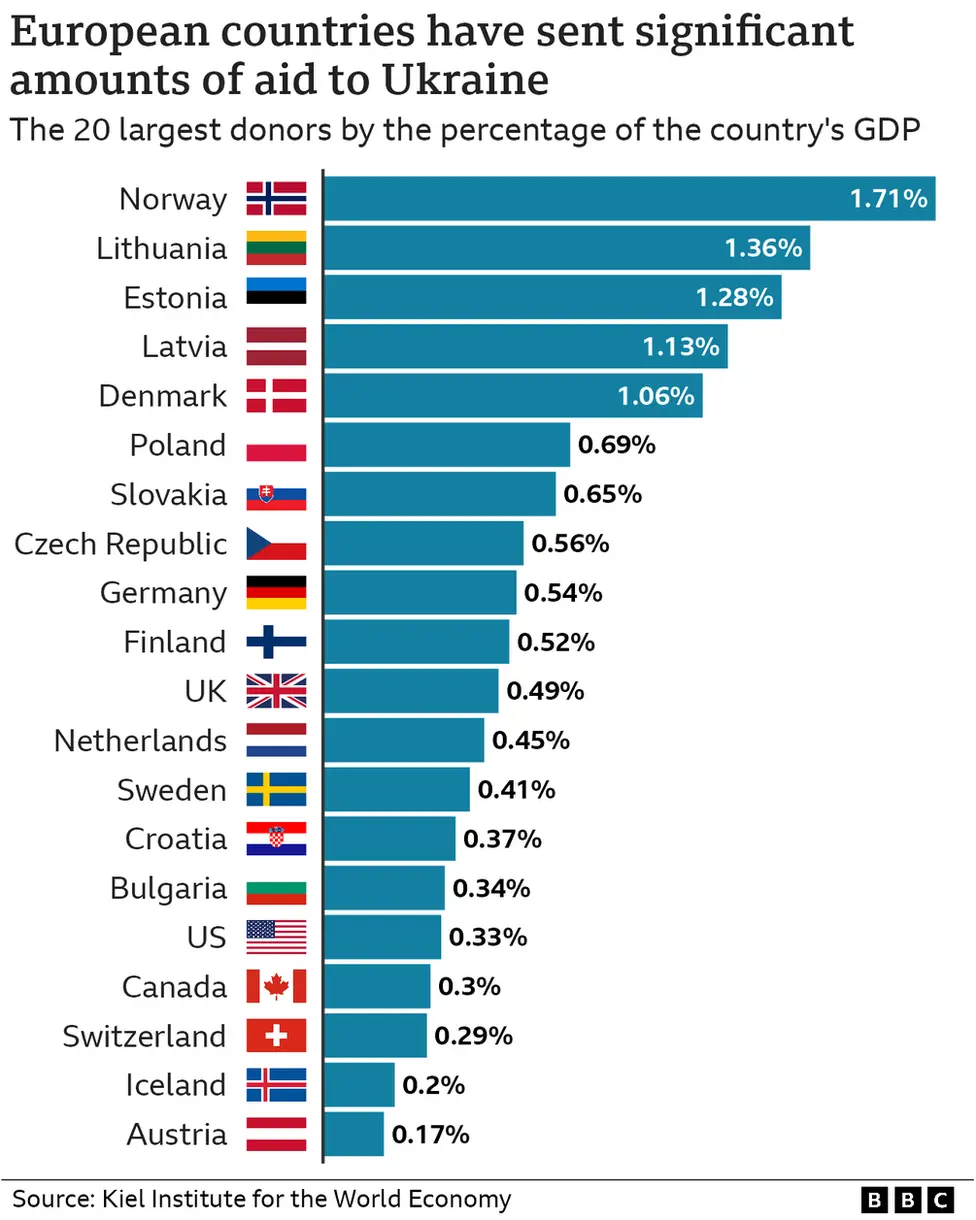
- According to data gathered by the Kiel Institute for the World Economy, as of the end of July, Norway had given the highest percentage, at 1.4%. Estonia and the two other Baltic states bordering Russia all also give over 1%.
- What it comes down to, Demus says, is a matter of perspective. For some, Ukraine is a distant country that many Americans don’t know or care about.
- For others, it’s a key battleground of a global conflict, with the US helping a nation to defend its territorial integrity and sovereignty while also degrading a foreign adversary at a (relative) bargain price and without the loss of US lives.
- “If you’re talking about pure cost-benefit analysis,” she says, “it kind of depends on what you value.”
- MIKE: There are lots of clarifying charts embedded in the story that are hard to describe here. For example, as a percentage of Gross Domestic Product (GDP), the US is, overall, only the 16th largest contributor to Ukraine. Norway is #1 at 1.71%, followed Lithuania, Estonia, Latvia; and Denmark, rounding off the Top 5 contributors with 1.06% of its GDP.
- MIKE: The US contribution so far is only 0.33% of GDP.
- MIKE: The US isn’t even the largest single contributor of aid to Ukraine. European Union institutions have given over US$80 billion in financial and humanitarian aid, and that’s separately from, and in addition to, individual EU countries.
- MIKE: The US is by far the largest contributor of military aid, probably because we have the largest military. In terms of military equipment aid, the US has contributed $46.6 billion. Germany is second with US$18.9 billion, and France isn’t even in the top 10. The US has contributed more military aid than the next 9 contributors combined.
- MIKE: And yet as wars go, our support for Ukraine is chicken feed. We have shed no American soldier’s blood in Ukraine because we have no boots on the ground. US deaths, in Afghanistan are around 7400 over 20 years, but that’s a highly variable number depending on how and who you count. Over 20 years, the Afghanistan war cost the US over $2.3 TRILLION, not counting future VA costs. That’s almost 50 times more than we have spent on Ukraine. Afghanistan started out as what many consider a justifiable war, but devolved into a very “gray” war. The good guys and bad guys in Ukraine are probably the clearest they’ve been since WW2.
- MIKE: And importantly, like it or not, agree with it or not, the money we have spent in Ukraine has clear strategic benefits for the US and its allies, both in diminishing the Russian global threat and also in possibly giving other potential peer aggressors second thoughts about the unpredictably of the course of invasions.
- ANDREW: I don’t think strategic benefits are a useful argument. Republicans clearly don’t care about the strategic utility of Ukraine anymore, and Democrats never should have. The Democratic Party has always said they’re concerned with justice. Conflicts like Korea, Vietnam, and Afghanistan show that when the US thinks about strategic benefits, justice quickly falls by the wayside.
- ANDREW: The best argument in my eyes to rally support for Ukraine from both sides of the aisle (pretending bipartisanship is useful for a minute) is that the quickest, cheapest outcome that won’t harm the US economy is a negotiated peace between Ukraine and Russia, and funding Ukraine is vital to that process.
- ANDREW: If Russia isn’t facing military pressure in Ukraine, they won’t feel the need to negotiate seriously, or even at all. If there are no negotiations at all, this conflict will continue until somebody goes bankrupt, which would not only take years, not only be havoc in whatever nation breaks the bank, but will have ripple effects on the economies of all of that nation’s allies and the world, including us. Fighting forever just isn’t a good idea, but neither is pulling out now.
- ANDREW: I think the best way forward is to ensure that all aid given by the US is considered a gift so that the people of Ukraine aren’t debt-trapped for the next 200 years, and that any further aid is conditioned on the Ukrainian government continuing negotiations with the Russian government. Not upon agreement, but upon continuing to talk. I’ve laid out my preferred peace plan before on the show, most recently in July, so you can visit the blog at thinkwingradio dot com to see that. It won’t happen tomorrow, but that is where Ukraine needs to be, and keeping them in fighting force is necessary to get there.
- THIS IS A RAPIDLY EVOLVING STORY — Nagorno-Karabakh: Ethnic Armenians leave amid cleansing fear; COM | Published Sept. 24, 2023 – 2 hours ago (TAGS: Azerbaijan, Nagorno-Karabakh, Armenia, Nagorno-Karabakh conflict
- Armenia says 1,050 people have crossed into the country from Nagorno-Karabakh, days after the majority ethnic Armenian enclave was seized by Azerbaijan.
- They entered after the government in Yerevan [Armenia] announced plans to move those made homeless by the fighting.
- Azerbaijan retook the area inhabited by some 120,000 ethnic Armenians early this week and says it wants to re-integrate them as “equal citizens”.
- But Armenia has warned they may face ethnic cleansing. …
- The Armenian separatist forces in the territory agreed to disarm on Wednesday, following a lightning Azerbaijani military offensive.
- Armenia says it will help anyone leaving Nagorno-Karabakh – but has repeatedly said a mass exodus would be the fault of the Azerbaijani authorities. …
- … David Babayan, an adviser to Nagorno-Karabakh’s ethnic Armenian leader Samvel Shahramanyan, told Reuters he expected almost everyone to leave. …
- THE PREVIOUS STORY WAS UPDATED 2 DAYS LATER AND NOW LINKS TO THIS — Nagorno-Karabakh: Thousands flee as Armenia says ethnic cleansing under way; By Kathryn Armstrong & Nataliya Zotova | BBC News, in London and on the Armenian border | Published SEPT. 26, 2023 / 1 day ago
- More than 13,000 people have so far crossed into Armenia from the enclave, which is home to a majority of some 120,000 ethnic Armenians. …
- Armenia’s PM has warned that ethnic cleansing is “under way” in the region.
- “That’s happening just now, and that is very unfortunate fact because we were trying to urge international community on that,” [PM] Nikol Pashinyan [: NICK-ol pash-IN-yin] told reporters.
- Azerbaijan has said it wants to re-integrate the ethnic Armenians as “equal citizens”.
- Envoys from Armenia and Azerbaijan are due to meet for EU-backed talks in Brussels later on Tuesday – the first such talks since the seizure of Nagorno-Karabakh. US state department spokesman Matthew Miller urged the two sides to reach a lasting peace agreement. …
- As people flee, there are large traffic tailbacks on the Armenian border. …
- A woman, Veronica, told the BBC that this was the second time she had become a refugee. The first time was during the conflict in 2020. …
- Tatiana Oganesyan [Tatiana oga-na-see-EN], doctor and head of a foundation of doctors and volunteers that’s now helping refugees in Goris, told the BBC that people who have come to the doctors are exhausted, malnourished and psychologically crushed.
- “People are shocked, they are telling us: I need pills, they are blue,” she says. Doctors then need to figure out their medication and find it for them.
- “We have nothing,” says an elderly woman who just arrived in Goris. She points at her jumper, saying it’s all she could bring with her from home. Her son is on crutches near her. …
- The Armenian government said in a statement on Sunday that hundreds of the refugees had already been provided with government-funded housing.
- But it has not released a clear plan of how it could cope with an influx of people. Prime Minister Pashinyan announced last week that plans were in place to look after up to 40,000 refugees.
- Armenians [that] the BBC has spoken to have said they are prepared to take refugees into their homes. …
- Mr Pashinyan has been accused of granting too many concessions to Azerbaijan and there are calls for his resignation.
- The Armenian separatist forces in the territory agreed to disarm on Wednesday, following a lightning-fast Azerbaijani military offensive. …
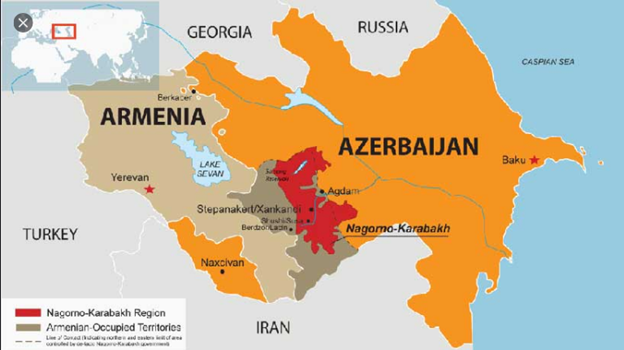
- Nagorno-Karabakh – a mountainous region in the South Caucasus – is recognised internationally as part of Azerbaijan, but has been controlled by ethnic Armenians for three decades.
- The enclave has been supported by Armenia – but also by their ally, Russia, which has had hundreds of soldiers there for years.
- Five Russian peacekeepers were killed – alongside at least 200 ethnic Armenians and dozens of Azerbaijani soldiers – as Azerbaijan’s army swept in last week.
- On Sunday, Azerbaijan’s defence ministry said it had confiscated more military equipment including a large number of rockets, artillery shells, mines and ammunition.
- Despite Azerbaijan’s public reassurances, there are fears about the residents of Nagorno-Karabakh, with only one aid delivery of 70 tonnes of food having been allowed through since separatists accepted a ceasefire and agreed to disarm.
- Ethnic Armenian leaders say thousands are without food or shelter and sleeping in basements, school buildings or outside. …
- MIKE: This is a horror story for the people involved. Most of us can’t imagine what this is like for them. After my house burned down in 2008, I was placed in the position of being grateful for donations of even used underwear from my very-supportive neighbors, and that isn’t a fragment of what these people are going through.
- MIKE: The roots of this story go back over a thousand years, with more recent events barely a hundred years ago. This most recent conflict between Armenia and Azerbaijan over Nagorno-Karabakh is an ongoing echo of the collapse of the Soviet Union over 30 years ago.
- MIKE: It’s possible that Azerbaijan’s military solution to a geographic and ethnic problem will resolve things for the time being, but hard feelings will remain. And old Soviet borders still leave conflict potential, since part of Azerbaijan likes isolated on Armenia’s southwest border. Sadly, this conflict is not over, and will probably flair up again in 20 or 30 years.
- ANDREW: Speaking of donations, I’ve added a link to the Armenian Food Bank on the blog post at thinkwingradio dot com and an article to help verify that the organization is on the ground and active to support the refugees that are arriving in Armenia. The AFB is the first food bank in Armenia, and they’re playing a major role in helping people in the absence of international aid.
- Nagorno-Karabakh Conflict In The Caucasus: What Documents Say? — MODERNDIPLOMACY.EU

=======================================================
- Make sure you are registered to vote! VoteTexas.GOV – Texas Voter Information
- It’s time to snail-mail (no emails or faxes) in your application for mail-ballots, IF you qualify TEXAS SoS VOTE-BY-MAIL BALLOT APPLICATION (ALL TEXAS COUNTIES) HarrisVotes.com – Countywide Voting Centers, (Election Information Line (713) 755-6965), Harris County Clerk
- Obtain a Voter Registration Application (HarrisVotes.com)
- Harris County “Vote-By-Mail’ Application for 2023
- Austin County Elections
- Brazoria County (TX) Clerk Election Information
- Chambers County (TX) Elections
- Colorado County (TX) Elections
- Fort Bend County takes you to the proper link
- GalvestonVotes.org (Galveston County, TX)
- Harris County ((HarrisVotes.com)
- LibertyElections (Liberty County, TX)
- Montgomery County (TX) Elections
- Walker County Elections
- Waller County (TX) Elections
- Wharton County Elections
- For personalized, nonpartisan voter guides and information, Consider visiting Vote.ORG. Ballotpedia.com and Texas League of Women Voters are also good places to get election info.
- If you are denied your right to vote any place at any time at any polling place for any reason, ask for (or demand) a provisional ballot rather than lose your vote.
- HarrisVotes.com – Countywide Voting Centers, HARRIS COUNTY – IDENTIFICATION REQUIRED FOR VOTING: Do not possess and cannot reasonably obtain one of these IDs?
- Fill out a declaration at the polls describing a reasonable impediment to obtaining it, and show a copy or original of one of the following supporting forms of ID:
- A government document that shows your name and an address, including your voter registration certificate
- Current utility bill
- Bank statement
- Government check
- Paycheck
- A certified domestic (from a U.S. state or territory) birth certificate or (b) a document confirming birth admissible in a court of law which establishes your identity (which may include a foreign birth document)
- You may vote early by-mail if:You are registered to vote and meet one of the following criteria:
- Away from the county of residence on Election Day and during the early voting period;
- Sick or disabled;
- 65 years of age or older on Election Day; or
- Confined in jail, but eligible to vote.
- Make sure you are registered:
- Ann Harris Bennett, Tax Assessor-Collector & Voter Registrar
- CHECK REGISTRATION STATUS HERE
- CLICK How to register to vote in Texas
- Outside Texas, try Vote.org.
- BE REGISTERED TO VOTE, and if eligible, REMEMBER TO FILL OUT AND MAIL NEW MAIL-IN BALLOT APPLICATIONS FOR 2023.
- Obtain a Voter Registration Application (HarrisVotes.com)
- Just be registered and apply for your mail-in ballot if you may qualify.
- You can track your Mail Ballot Activity from our website with direct link provided here https://www.harrisvotes.com/Tracking
____________________________________________________________________________
Remember! When you donate to KPFT, your dollars pay for:
- Transmitter and equipment costs
- Programs like Thinkwing Radio, Politics Done Right, and other locally-generated political talk shows
- KPFT’s online streaming
- Maintaining a wide variety of music programs
Each time you turn on the radio, you can hear your dollars at work!
Make your contribution to this station right now. Just call 713 526 5738. That’s 713-526-5738. Or give online at KPFT.org!

Discover more from Thinkwing Radio with Mike Honig
Subscribe to get the latest posts sent to your email.
